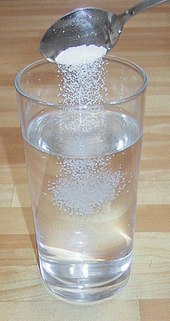
 Usually, the substance present in the greatest amount is considered the solvent. Solvents can be gases, liquids, or solids. One or more components present in the solution other than the solvent are called solutes. The solution has the same physical state as the solvent.
 A solution is a homogeneous mixture of two substances—that is, it has the same distribution of particles throughout. Technically speaking, a solution consists of a mixture of one or more solutes dissolved in a solvent.